Where We Sleep: The Rooftop Tent and the Tailgate Tent
The third entry in the build diary. We've sorted the power and the kitchen — now for the part that turns a parked Defender into a place to spend the night.
A Defender you can cook out of is great. A Defender you can sleep in — properly, comfortably, in about the time it takes to boil a kettle — is what makes long trips actually sustainable. This is the piece that closes the loop: two tents that, together, turn Sir Frodo into a full basecamp wherever the road runs out.
One lives on the roof. The other wraps around the back. Here's how they work.
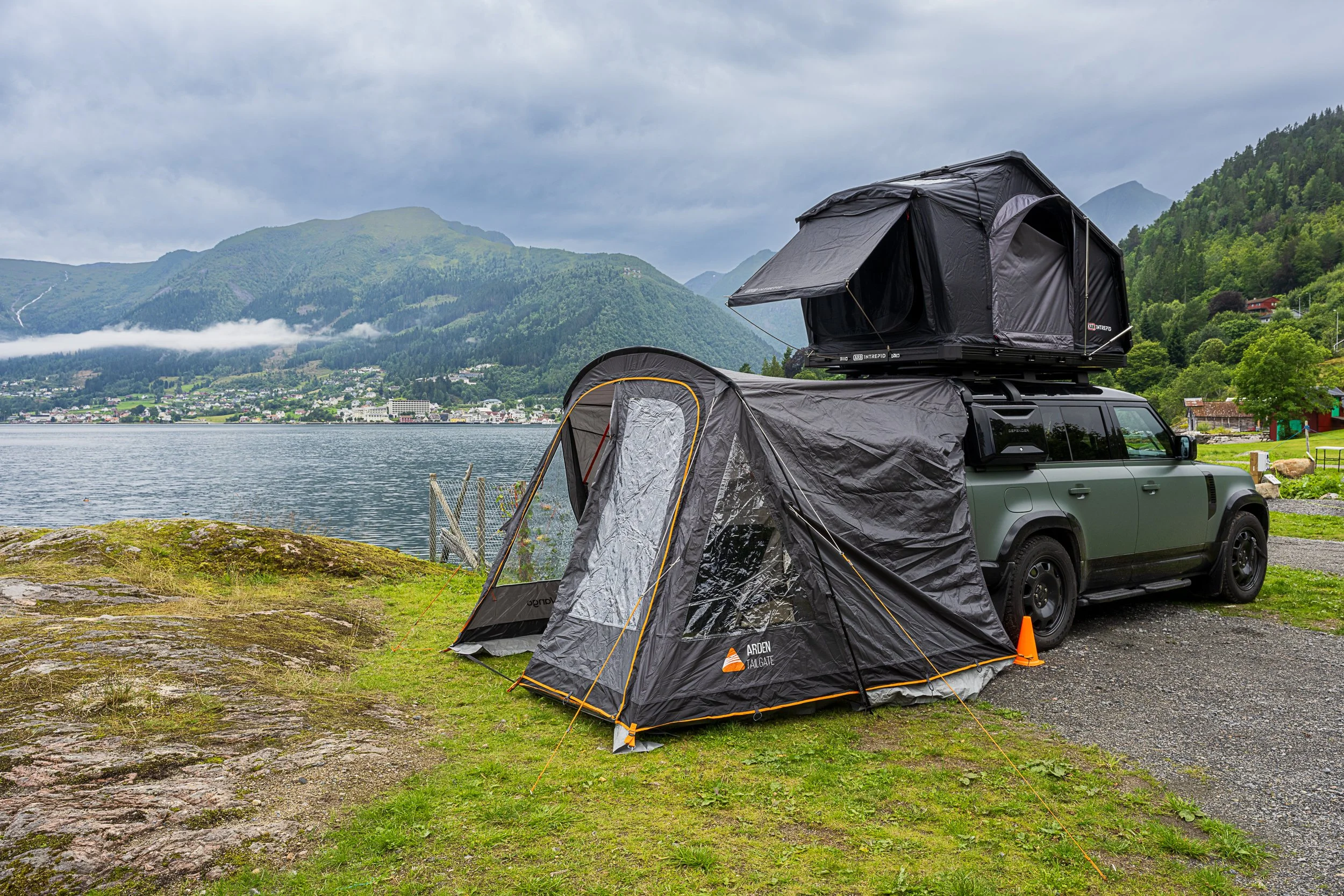
The full basecamp — rooftop tent up, tailgate tent pitched out back, somewhere on a Norwegian fjord. Bedroom on top, living room below.
Up top: the rooftop tent
On the roof sits an ARB Intrepid hardshell rooftop tent, reached by a telescopic ladder that clips down in seconds.
The choice of a hardshell tent was deliberate. Soft-shell tents are cheaper and pack smaller, but they're slow to set up and take down, and they fight you in wind and rain. The hardshell is the opposite: unclip it, and it pops up on its gas struts almost on its own — the bed is made, the mattress stays inside permanently, and pack-down is just as quick. Pull into a spot, raise the roof, and you're ready to sleep before the kettle's even warm.
Sleeping up top has real advantages on the road: you're off the cold, wet or uneven ground, away from anything that crawls, and you keep the whole interior of the Defender free for living and storage. And the view from up there in the morning is hard to beat.
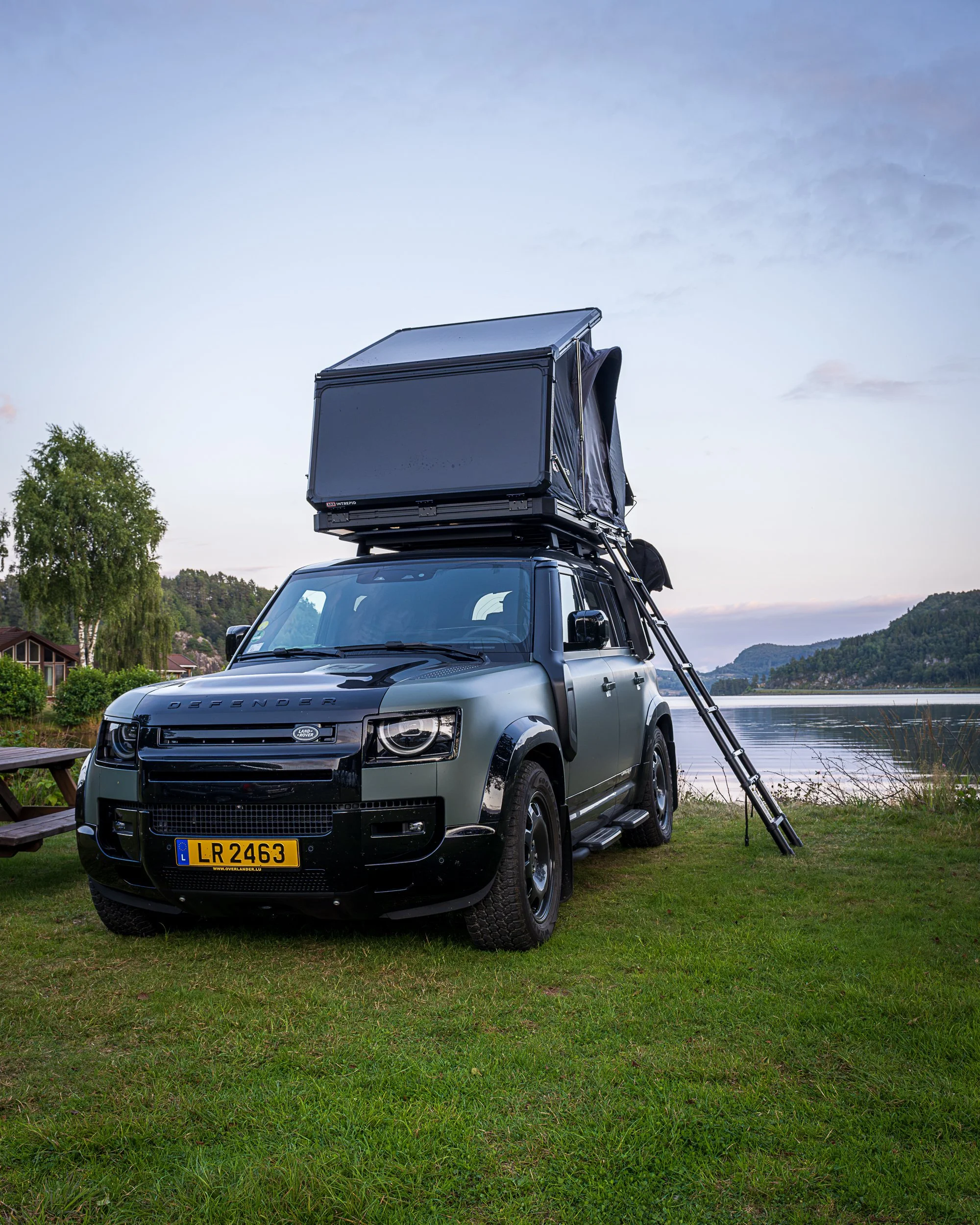
The ARB Intrepid open and the ladder down at dusk. Under a minute from closed to made-up bed.
Out back: the tailgate tent
The rooftop tent handles sleeping. The Arden Tailgate tent handles everything else.
It pitches off the rear of the Defender and encloses the whole back of the truck in a weatherproof room — right where the slide-out kitchen and the fridge live. That changes the game when the weather turns: you can cook, eat and move around out of the wind and rain, in a dry, standing-height space that connects straight to the boot.
It's endlessly useful. A shelter to cook under in a downpour. A changing room. A place to dump muddy boots and wet gear before they come inside. Extra covered sleeping space when there are more of us. And because it attaches to the vehicle rather than replacing it, packing up in the morning is quick — the truck is already loaded.
The two together
This is where the whole build finally makes sense. The rooftop tent is the bedroom; the tailgate tent is the living room and mudroom; the boot in between is the kitchen. String them together and you've got a genuine little home — one that packs down in minutes, drives anywhere, and sets up again the same evening somewhere completely new.
Powered by the lithium system, stocked from the drawers, cooked on the induction hob, and slept in up top — every chapter of this build working together, exactly as it was meant to.

The payoff. Roof up, ladder down, still water and a quiet dawn. This is what the whole build is for.
The build, for now
Three chapters in, the build has gone from a new Defender to a self-sufficient expedition vehicle: its own power, its own kitchen and storage, and its own shelter for the night. Everything we need to disappear off the map for a while and stay comfortable doing it.
The build is never truly finished — there's always one more idea — but this is the point where it stops being a project and starts being a way to travel. And that's the part I've been waiting for.
Next stop: the road.